Start with the source, not the gadget
Water that looks cold and clear can still contain bacteria, viruses or parasites from human or animal waste. CDC advises treating water when its safety is uncertain, including water used for drinking, cooking, making ice or drinks, washing produce and brushing teeth. Appearance, smell and taste cannot confirm microbiological safety.
Before collecting, look upstream and around the drainage. Avoid water near mines, industrial sites, fuel spills, algal blooms, agricultural runoff, wastewater discharge, dead animals or an official contamination advisory. Move to a better source when possible. Treatment is not a reason to collect from the first puddle available.
Choose moving water from a less disturbed location when the land manager recommends it, but do not treat “running” as a safety guarantee. Minimize stirred sediment. Keep feet, hands, bottles and outlet hoses from muddying the collection point.
Know what each method is built to do
CDC calls boiling the best way to kill germs. Bring clear water to a rolling boil for one minute; above 6,500 feet, boil for three minutes. Let it cool safely. This covers viruses, bacteria and parasites, but it uses time and fuel and does not remove harmful chemicals.
Boiling
Strength: Kills all major germ types when CDC time and elevation guidance are followed.
Limits: Needs fuel and cooling time; does not remove chemical hazards.
Portable filtration
Strength: Many filters remove parasites; smaller absolute pore sizes can also remove bacteria.
Limits: Most portable filters do not remove viruses. “Better taste” is not proof of germ removal.
Chemical disinfection
Strength: Products can kill bacteria and viruses when label concentration and contact time are followed.
Limits: Bleach and iodine do not work well against parasites. Chlorine dioxide performance and contact time vary by organism and product.
Ultraviolet light
Strength: Portable UV units can inactivate parasites, bacteria and viruses in small amounts of clear water.
Limits: Cloudy water blocks light; batteries, lamp condition, container shape and technique matter.
Filter labels deserve precise reading. CDC says an absolute pore size of 1 micron or smaller, or certification to NSF standards 53 or 58 for cyst reduction, addresses parasites but not viruses or all bacteria. An absolute pore size of 0.3 micron or smaller removes bacteria and parasites but still not viruses. “Nominal” and “absolute” are not interchangeable. Check the maker’s stated organisms, certification, capacity, flow conditions and replacement rule.
If boiling is not practical, CDC’s next-best general option is filtration followed by disinfection. That combination covers gaps better than assuming one familiar tool handles every organism. Follow the filter and disinfectant instructions; do not invent a shorter contact time because the water looks clean.
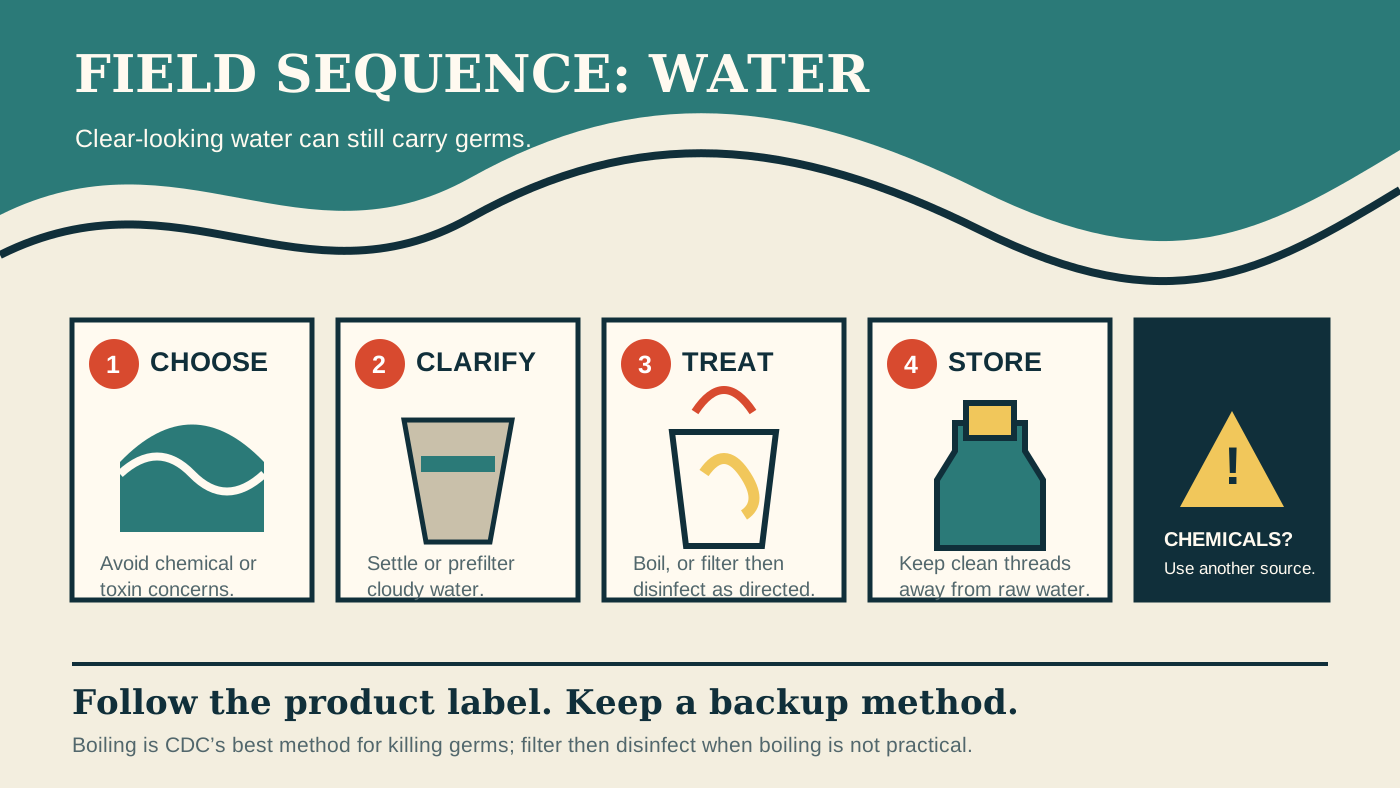
Use a clean field sequence
- Collect deliberately. Separate the raw-water container from the clean bottle. Mark them so a tired partner can tell which is which.
- Clarify cloudy water. Let sediment settle and pour the clearer portion off, or pass it through a clean cloth or prefilter. Clarification improves treatment conditions but does not make water safe by itself.
- Treat completely. Boil for the CDC time, or operate the filter within its instructions and add the chosen disinfection step. Start the full contact-time clock after mixing. Cold or cloudy water may require specific label adjustments.
- Protect the clean side. Keep raw water off the clean hose, bottle threads, cap and hands. A correctly treated liter can be recontaminated by one wet dirty cap.
- Record capacity and condition. Know how many liters the cartridge has processed, whether it froze, and when the chemical product expires.
Plan for the failure points
A filter freezes
Water trapped in some hollow-fiber filters can expand when frozen and damage fibers without leaving a visible crack. Follow the maker’s freeze instructions. If freezing may have occurred and the manufacturer says integrity cannot be confirmed, do not trust the filter. Carry a chemical or boiling backup.
Flow slows down
Do not force pressure beyond the instructions. Turbid water can clog media, and forcing it may damage the unit. Clarify and prefilter water, then use the maker’s cleaning or backflushing procedure. Replace components at the stated limit.
The UV unit will not start
Cloudiness, a depleted battery, a dirty lamp or a container that does not match the device can defeat the plan. Carry charged power and a backup method, and practice the exact stirring or exposure sequence at home.
The disinfectant is old or the clock is unclear
Use a product labeled for drinking-water treatment and follow its storage, dose and expiration instructions. Write the contact time on the bottle or keep the label with it. Do not estimate drops from memory or move treated water into the drinking rotation before the required time passes.
Pack a two-path system
A treatment plan should survive one broken part. Match the primary and backup to the trip. A group using a gravity filter may carry enough labeled disinfectant for the route. A solo traveler relying on UV may carry tablets and a way to clarify water. A cold-weather group planning to boil should protect ignition and fuel while also carrying a no-flame backup.
- Primary treatment sized for the group’s daily volume and likely water sources.
- Independent backup that does not share the same failure point.
- Raw-water collection vessel and clearly separate clean storage.
- Prefilter material for silty sources.
- Instructions, contact-time timer and cartridge-capacity record.
- Extra water capacity for dry stretches or contaminated sources that must be bypassed.
Water planning also includes route information. Check current ranger reports, seasonal source reliability, closures and local treatment advice. A mapped stream may be dry, frozen, inaccessible or under an advisory. Carry enough water to reach the next verified source without depending on an optimistic map symbol.
Practice drill: treat two liters without improvising
At home or in a permitted practice area, have a partner hand you cloudy-looking tap water made with clean soil for simulation only. Clarify it, run the primary treatment exactly as instructed, protect the clean side and start the correct timer. Then simulate a failed filter or dead battery and switch to the backup. The drill is complete when both people can explain what the system handles, what it misses and which source conditions mean “walk away.” Do not drink the practice water unless every ingredient and vessel is food-safe and the treatment is being used exactly as directed.
Sources and further reading
- CDC, Water Treatment Options When Hiking, Camping, or Traveling, January 30, 2025.
- CDC, Backcountry Water Treatment Method Chart.
- CDC Yellow Book 2026, Water Disinfection for Travelers, April 23, 2025.
- U.S. EPA, Emergency Disinfection of Drinking Water.
- National Park Service, Denali Backcountry Water and Sanitation.
Research reviewed September 28, 2026. Product designs and local conditions vary; follow current labels, land-manager instructions and health advisories.